Picture a couple planning an aisle walk, vows, cake and toasts, and wondering whether all of it is required. American wedding traditions work as a shared script that most couples follow, while the details shift with venue, region and family.
The script is a useful frame for the wider social question of how does education affect society, because both show how communities pass shared expectations from one generation to the next.
The shared script behind American weddings
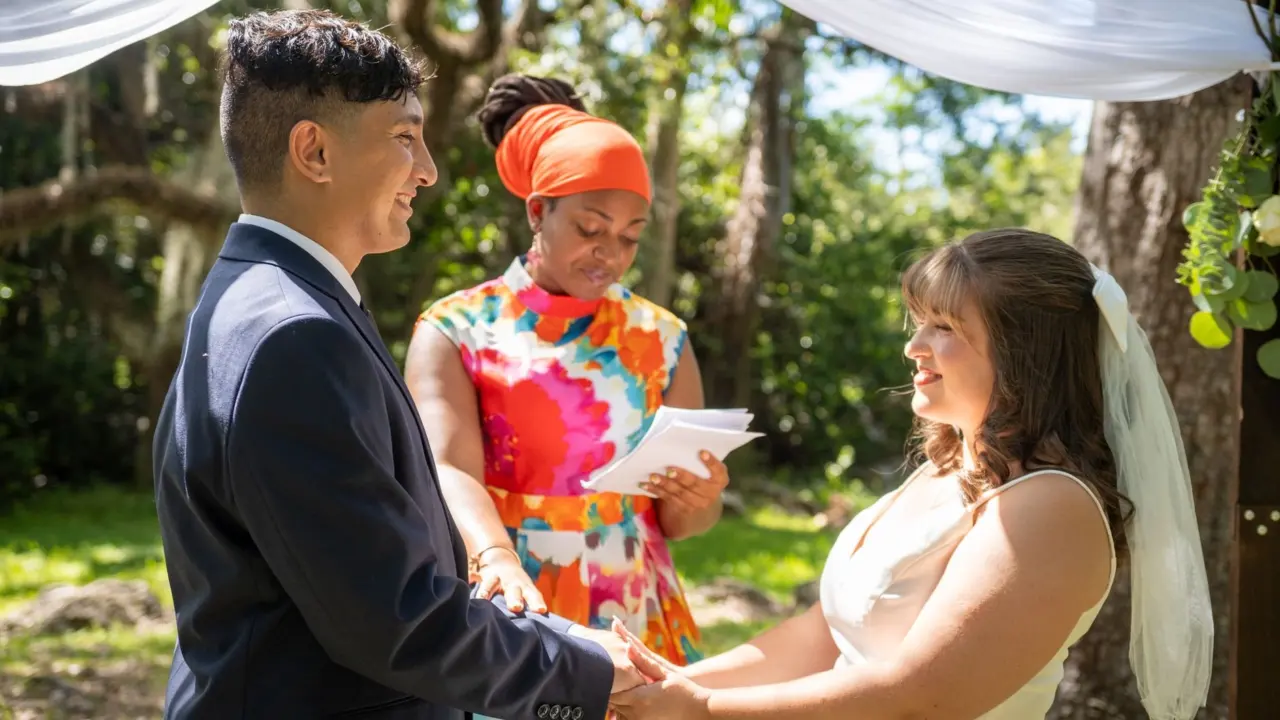
The most common misreading of American wedding traditions is that each wedding invents its own order of events. A sociology overview from the University of Texas Permian Basin notes that most weddings still follow the same basic script: an aisle walk, vows, a kiss, cake and speeches. Couples change the music, the wording and the setting, but guests usually recognise the sequence. That recognition is the practical value of a tradition. It tells guests when to stand, when to listen and when to celebrate.
The table below sets the most common assumptions against what the evidence supports.
| Common assumption | What the evidence shows | Planning use |
|---|---|---|
| Every wedding is built from scratch | Most weddings follow one basic sequence of aisle walk, vows, kiss, cake and speeches. | Treat the sequence as a skeleton and personalise within it. |
| These customs are ancient and unchanged | The modern wedding look appears with the Victorian era. In the Middle Ages, marriages were often arranged for political, economic or social gain. | Keep a custom because it means something to you, not because it is “always done”. |
| One national style applies everywhere | American weddings have different styles depending on the location and state. | Ask local family and vendors what guests in your area expect. |
The sequence and the Victorian dating come from the University of Texas Permian Basin sociology overview, and the regional point comes from Imperial Palace Banquet Hall.
Ceremony customs: processional, vows and attire
The ceremony is the most scripted part of an American wedding, and its customs centre on how the couple arrives and what they say.
The processional
The processional is the entrance of the wedding party and the couple. A photographer’s guide to American customs, Striegler Photography, describes the father walking the bride down the aisle as one of the most emotional moments. Treat it as a family choice rather than a requirement. Couples who prefer a different escort still keep the underlying idea, which is that family visibly hands over its support as the ceremony begins.
Vows
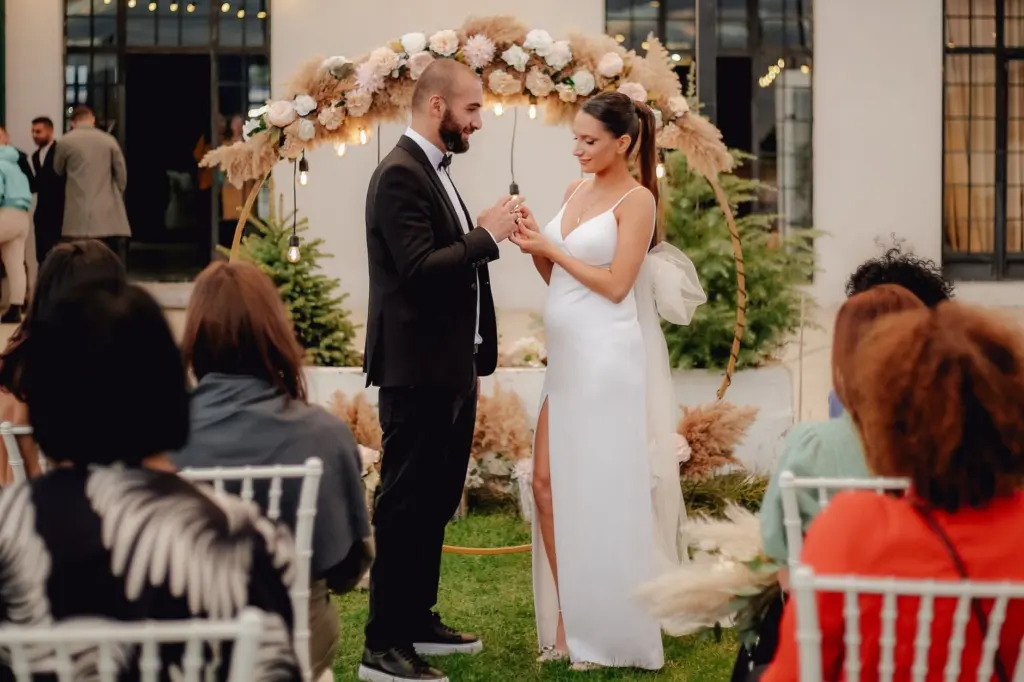
Vows are the spoken promise at the centre of the ceremony. According to Imperial Palace Banquet Hall, they are often written by the couple, though they can also follow a religious script. A written vow suits couples who want the words to sound like them. A religious or traditional script suits couples who want the wording to carry its own history. Neither choice changes the ritual’s role as the moment the commitment is declared.
Attire and the no-peek custom
Striegler Photography reports that, traditionally in America, the bride and groom do not see each other on the wedding day before the ceremony. Its description of the custom ties the couple’s first sight of each other to the aisle walk. The same source ties white to purity and reserves it for the bride. The first-look photo session is a newer shift away from the no-peek custom. Couples who value the aisle moment keep the old rule. Couples who want portraits taken before the ceremony often choose the first look.
Reception customs: toasts, first dance and bouquet
The reception turns the ceremony’s formality into hospitality, and its customs are the ones guests take part in most directly.
- Toasts: The maid of honor and the best man typically give a speech and then a toast to the couple, according to Imperial Palace Banquet Hall. The same source says the groom picks the best man to signify a close bond, and the bride selects a bridesmaid of honor. Because these roles signal closeness, choose speakers for their relationship with the couple rather than for their rank in the wedding party.
- First dance: The first dance is usually a slow dance to quiet music that the newlyweds share, and it is often their favourite song. It works as an opening ritual, so the song matters less than the fact that the couple is the centre of attention for a few minutes.
- Bouquet toss: In this custom the bride throws her bouquet backward to unmarried women, and the catcher is thought to marry next. It is optional, and couples who find the framing dated can simply skip it.
- Food: The same venue names BBQ and steak as the most popular reception choices. That is one venue’s observation, so use it as a reference point rather than a rule.
Cake cutting rounds out the reception script, and its history is covered next.
Where the customs come from
Many American customs trace back to older European and ancient practices, and the stories behind them are traditional explanations rather than settled records. They help show why a custom feels meaningful, and they correct the idea that every symbol has always meant what it means now.
- The white dress: Brides First says the white gown was popularized in 1840, when Queen Victoria married Prince Albert in one. The purity meaning attached to white is a later layer on a fashion moment.
- The veil: The same source traces the veil to ancient Rome, where brides wore a flame-colored veil. Weston Wintergardens adds that veils were initially worn to protect brides from evil spirits or to symbolise modesty and purity.
- Bridesmaids and groomsmen: According to Weston Wintergardens, bridesmaids and groomsmen in ancient Rome were meant to confuse evil spirits by dressing similarly to the bride. It also links the best man to medieval protection.
- Wedding cake: In ancient Rome, wheat or barley cakes were broken over the bride’s head for fertility. Over time this evolved into tiered cakes symbolising prosperity and happiness, per the same source.
- Rings: Brides First says rings date back to ancient Egypt, where their unbroken circular shape symbolised eternity. Weston Wintergardens notes that many ancient cultures believed the ring finger had a vein connected to the heart.
- Tying the knot: Brides First links the phrase to handfasting, a practice believed to have originated in Celtic and Norse cultures.
- Bouquet toss: Brides First says the bride began tossing her bouquet to the crowd to divert attention and protect her gown, and places the custom’s origin in England.
These are mostly secondary accounts, so repeat them as “traditionally said to” rather than as proven history. The sociological account is firmer on the broad arc: marriages in the Middle Ages were often arranged, and the modern wedding takes recognisable shape in the Victorian era.
How customs vary by region and culture
American weddings have different types of styles depending on the location and state, as Imperial Palace Banquet Hall puts it. The same source says some Americans still marry in a church, while others choose botanical gardens, museums or backyards. Venue is therefore one of the clearest places where variation shows up, and it shapes everything from the processional route to how formal the reception feels.
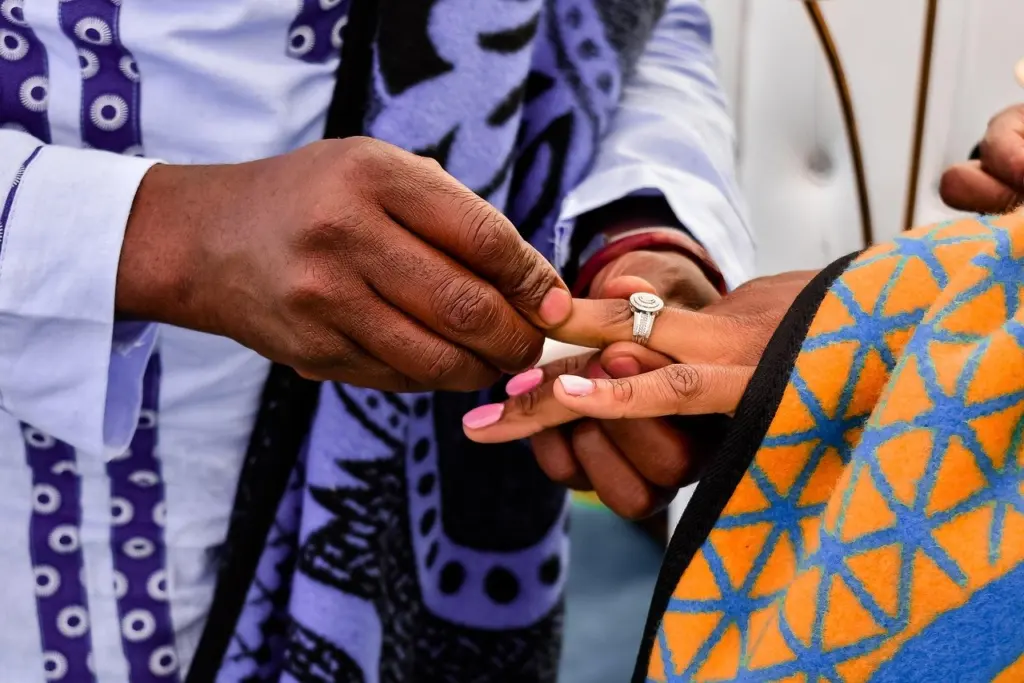
The venue’s account also describes American marriage customs as becoming more diverse in recent years. For a couple, the practical reading is to keep the parts of the script that carry meaning for their families and replace the parts that do not. A ring exchange, for example, can sit inside very different clothing, music and cultural traditions without changing the ritual itself.
Weddings as social rituals
Sociologists treat wedding customs as rituals that mark a change in status in front of a community. The University of Texas Permian Basin overview describes what sociologists call the wedding paradox: weddings become more extravagant even as marriage’s social necessity fades. In that reading, the scale of a wedding is less about practical need than about the public statement it makes.
That is why customs persist even when couples adapt them. Weddings are public acts witnessed by family and friends, much like the shared commitments described in Civic Responsibility Examples: 12 Real-World Ways You Can Make A Difference In Your Community – Peopleil. For a related look at how shared practices are learned and passed on, see how does literacy affect society.
Frequently asked questions
| Question | Answer |
|---|---|
| What are common American wedding traditions? | The usual sequence is the aisle walk, vows, a kiss, cake and speeches. Common extras include the first dance, the bouquet toss and toasts from the best man and maid of honor. |
| Where did American wedding traditions come from? | Many trace to older European and ancient practices, such as Roman veils and cakes, Egyptian rings and Celtic or Norse handfasting. The modern wedding look is dated to the Victorian era. |
| How do wedding traditions differ by region? | Styles differ by location and state. Venues range from churches to gardens, museums and backyards, and menus and customs vary with local and family preference. |
| Do couples have to write their own vows? | No. Vows are often written by the couple, but they can follow a religious script instead. |
| Why do brides wear white? | White is associated with purity, and the gown was popularized in 1840 when Queen Victoria wore one at her wedding to Prince Albert. |