Germany holiday traditions appear across towns and seasons. The guide explains main customs, foods, and events travelers will see in 2026. It shows where to go and what to expect. The text uses clear detail and simple language. Readers will learn practical tips and cultural context for markets, Advent rituals, New Year rites, and Easter events.
Key Takeaways
- Germany holiday traditions shine most vividly at Christkindlmarkt, where markets blend crafts, food, and festive lights from November to December.
- Advent rituals, including lighting wreath candles and St. Nicholas gifts, center family life and seasonal celebration in German homes.
- Silvester New Year customs feature fireworks, communal toasts, and televised speeches that symbolize lively year-end farewells.
- Easter in Germany combines egg painting, bonfires, and regional events to celebrate spring’s renewal and local culture.
- Visitors should plan visits around market crowds, carry cash and reusable cups, and respect safety rules during fireworks to fully enjoy Germany holiday traditions.
Christkindlmarkt: Germany’s Iconic Christmas Markets
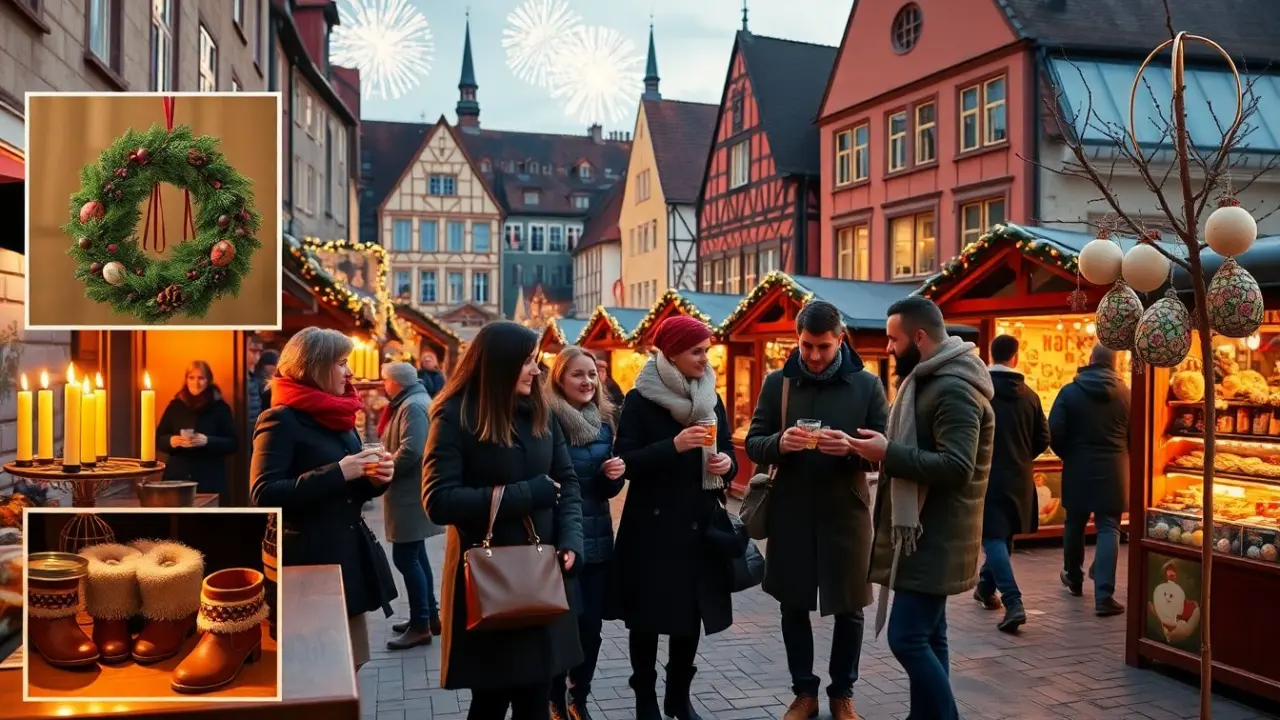
Christkindlmarkt highlights Germany holiday traditions in winter. Visitors find wooden stalls on town squares. Sellers offer ornaments, candles, and wool goods. People smell roasted almonds, grilled sausages, and mulled wine. Children hear carols while families browse lights. Cities like Nuremberg, Dresden, and Munich host large markets. Smaller towns run cozy village markets. Travelers should carry cash and a reusable cup for Glühwein. They should plan weekday visits to avoid crowds. Photographers find warm light and festive scenes from late November to December. The markets show how Germany holiday traditions mix craft, food, and local pride.
Beyond the food and gifts, markets often include themed areas such as historical handicraft demonstrations, nativity scenes, and children’s rides. Look for regional specialties: Nuremberg’s gingerbread and spicy sausages, Dresden’s stollen stalls, and Rhineland’s Kartoffelpuffer (potato pancakes). Many markets open around the first Advent Sunday and run until just before Christmas Eve; some larger markets remain open through New Year. Practical tips: arrive early for quieter browsing, dress in layers for long outdoor visits, and use public transit since roads and parking fill quickly. If you want authentic souvenirs, ask artisans about materials and care instructions rather than buying mass-produced items from nearby stalls.
Advent, St. Nicholas, And The Weihnachtsmann: Family Traditions
Advent marks four Sundays before Christmas. Families light candles on an Advent wreath each week. Children open windows on Advent calendars to find small gifts. On December 6, St. Nicholas appears in shoes or boots. Parents place sweets and small toys in footwear overnight. In some homes, the Weihnachtsmann brings gifts on Christmas Eve. Other families follow a Christkind tradition where an angelic figure delivers presents. Churches hold services and choirs sing carols. Families prepare special meals and decorate trees. These rituals show how Germany holiday traditions center on family rhythm and seasonal markers.
Regional and household variation is wide: in parts of Bavaria and Austria, processions with lanterns or “Krampus” figures (traditional companions of St. Nicholas) add lively folklore; in Protestant regions, focus often shifts to Advent devotion and carol singing. Typical seasonal recipes include lebkuchen (spiced cookies), marzipan confections, and winter stews that are prepared together as family activities. Advent calendars range from simple paper windows to elaborately handmade wooden versions passed down through generations. Etiquette tip: if invited to a German home during Advent, bringing a small edible gift or flowers is appreciated, and guests should remove outdoor shoes if hosts request it. For travelers hoping to observe local life, attend a community Advent concert or a Christkind arrival parade, but be mindful of quiet, reflective traditions that coexist with festive events.
Silvester And New Year Customs: Fireworks, Speeches, And Rituals
Silvester marks New Year’s Eve across Germany. People gather in squares and on bridges to watch fireworks. Friends meet for small parties or big public events. Many families toast with Sekt at midnight. Television viewers watch the federal president’s speech and the classic comedy sketch that follows. Streets fill with noise and light as fireworks launch from private hands and public displays. Cities enforce safety rules and set restricted zones for large fireworks. Travelers should respect local regulations and keep a safe distance. The celebrations reflect how Germany holiday traditions include loud, communal farewells to the year.
Local customs add texture: some families follow a lighthearted tradition called Bleigießen (lead pouring) or its modern alternatives, where molten metal is shaped into figures to “predict” the year ahead; others adopt elaborate dinner parties with multi-course menus culminating in midnight fireworks. Major public events in city centers may require tickets or have timed access; smaller towns often gather around town halls for countdowns. Practical safety: avoid crowded bridges and waterfronts where spiking numbers can create hazards, check tram and train schedules (many services reduce or alter routes on Silvester), and never pick up unexploded fireworks. If you plan to set off your own fireworks, buy approved items only and follow local age and zone restrictions—police may enforce fines for illegal use. For quieter New Year observances, consider attending a church watchnight service or early-afternoon concerts held in many towns.
Easter And Spring Celebrations: From Ostern To Osterfeuer
Easter marks spring and shows strong local variation in Germany holiday traditions. Families paint and hide eggs for children. Churches hold sunrise services on Easter Sunday. Many towns build large Easter trees decorated with colored eggs. Communities light Osterfeuer bonfires on Easter Saturday to signal the end of winter. Villages often host spring markets and craft fairs. Travelers find family walks, egg hunts, and festive meals featuring lamb or fish. Regional customs add unique events, such as island processions or alpine parades. The spring events emphasize renewal, community, and seasonal foods.
Beyond common activities, each region highlights distinct practices: in northern coastal areas, processions and blessing of the fields can accompany Easter; in parts of Saxony and Thuringia, elaborate Easter markets showcase painted eggs and woodcarvings. The Osterfeuer often includes a communal meal and music—locals may bring brushwood to add to the fire and stay into the evening. If visiting during Easter week, note that many shops close on Holy Friday and Easter Sunday, while train and bus timetables may run reduced services on public holidays. Practical advice: join a local egg-decorating workshop to learn traditional techniques, check municipal calendars for public Easter parades or craft markets, and plan dining reservations early for holiday menus that feature seasonal ingredients like asparagus and spring herbs.