Mexico holiday traditions show how communities celebrate history, faith, and family. The writer explains key customs, foods, music, and symbols. The reader learns practical details and cultural context. The piece uses clear examples and short facts. The tone stays factual and friendly.
Key Takeaways
- Mexico holiday traditions uniquely blend Indigenous and Spanish Catholic customs, creating rich community celebrations.
- Independence Day and Día De Los Muertos are major holidays that highlight Mexico’s national identity and cultural heritage.
- Family-centered events like Las Posadas and Midnight Mass strengthen faith and seasonal giving traditions.
- Traditional Mexican holiday foods such as tamales, mole, and pan de muerto are central to festive meals.
- Music, decorations, and symbols like mariachi bands and papel picado enhance the festive atmosphere and cultural expression.
- Local artisans and markets play a vital role in sustaining and sharing Mexico holiday traditions through crafts and seasonal items.
What Makes Mexican Holiday Culture Unique
Mexico holiday traditions blend Indigenous practices and Spanish-era Catholic customs, producing celebrations that are communal, sensory, and layered with meaning. Indigenous cosmologies contribute rituals, offerings, and an emphasis on cycles of life and death, while Catholic liturgy and feast days provide structure and a calendar that communities adapted to local needs. The result is a cultural tapestry in which public ceremonies, private family observances, and popular street festivities coexist.
Regional variation is central: Oaxaca, Veracruz, Michoacán, Yucatán and other states keep distinct musical styles, costumes, and altar traditions. For example, the way families build home altars or the ingredients used in traditional dishes can differ from town to town. Handcrafts, storytelling and local cuisines are passed down across generations, so the same holiday can feel different in neighboring municipalities. Visitors often remark on how holidays combine warmth, pageantry and reverence all at once.
Practical features of these traditions include community calendars, market cycles timed to holidays, and the involvement of schools, churches and civic groups in parades and decorations. Understanding this network of social institutions helps explain why holidays remain resilient and central to Mexican social life.
Major National Holidays: Independence Day And Día De Los Muertos
Mexico holiday traditions highlight two major national events that define modern identity and attract widespread participation across the country.
Independence Day (celebrated the night of September 15 into September 16) centers on civic ritual: the reenactment of El Grito by municipal leaders, fireworks, and street-level festivities. Town plazas fill with people waving flags, bands playing patriotic songs, and families sharing street food. While the political origin is eighteenth- and nineteenth-century, the contemporary celebration mixes official speeches with spontaneous parties, regional music and local culinary specialties.
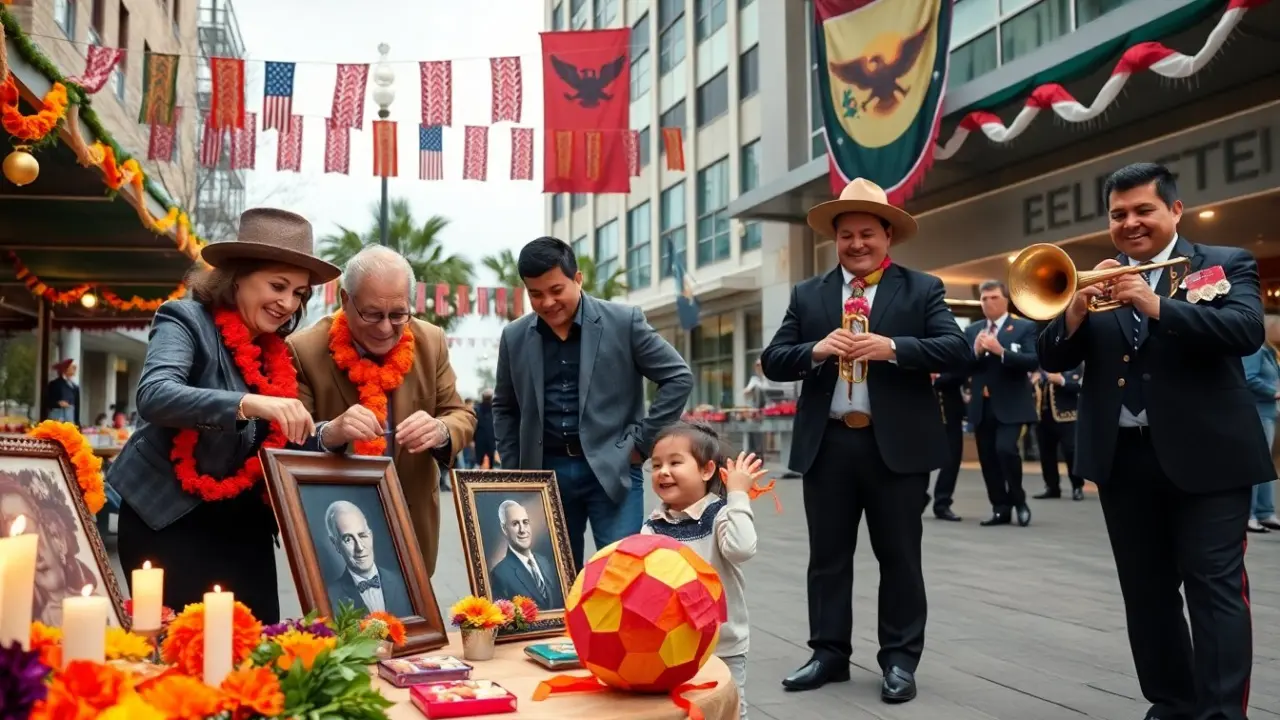
Día De Los Muertos (primarily observed November 1–2) is a multilayered commemoration in which families remember deceased relatives through altars (ofrendas), candles, flowers—especially marigolds (cempasúchil)—and favorite foods placed at home altars and cemetery plots. The holiday combines pre-Hispanic beliefs about cycles of life and death with Catholic All Saints/All Souls timing. Practices include building multi-tiered altars with photos, water, sugar skulls, incense, pan de muerto and toys for children; cleaning and decorating graves; and holding vigils where stories and memories are shared. In some regions, processions, public displays of artful skeleton imagery, and communal feasts form an expansive public expression of remembrance.
Family And Religious Traditions: From Las Posadas To Midnight Mass
Family life shapes many Mexico holiday traditions. Las Posadas (nine evenings before Christmas) is a community enactment of Mary and Joseph’s search for shelter. Households or parish groups rotate hosting duties; participants process between homes, sing traditional posada songs, and end the evening with shared food, drinks and a piñata. The ritual reinforces neighborhood ties and the hospitality that characterizes the season.
Children’s participation is important: fundraising activities, making paper decorations, and preparing offerings for family altars are all ways that cultural knowledge is transmitted. Piñatas in Las Posadas often take regional shapes and colors, and the games and treats associated with them are adapted locally.
Religious observance continues with Midnight Mass (Misa de Gallo) on Christmas Eve, which for many families is the spiritual center of the holiday. After Mass, extended families often return home for a late-night meal that varies by region—some may serve tamales and atole, others mole or roast meats—followed by informal visits to relatives and neighbors. These rituals emphasize intergenerational bonds and the link between liturgy and household practice.
Food, Music, Decorations, And Festive Symbols
Food and music define many Mexico holiday traditions and act as mediums for memory and identity. Seasonal dishes often require days of preparation and are shared communally. Common holiday foods include tamales (prepared in many regional varieties and frequently made in family groups), mole (a complex sauce served at celebrations), pozole (a hominy stew often associated with civic festivals), and pan de muerto (a sweet, symbolic bread for Día De Los Muertos). Beverages such as atole or hot chocolate accompany cold-night gatherings. These dishes carry ingredients and techniques that link contemporary cooks to ancestral practice.
Music ranges from mariachi and brass bands at civic events to indigenous drums and flute traditions in ritual contexts. Songs mark different moments—processions, dances, wakes and public ceremonies—and musicians are often called directly into homes or hired for neighborhood parties. Dance forms, from folkloric ballet to regional folk dances, add visual storytelling and historical memory to holiday programming.
Decorations and symbols—papel picado banners, papel mâché figures, bright textiles, candles, nativity scenes (nacimientos), and skull imagery for Día De Los Muertos—create a layered visual language. Colors, materials and motifs vary by place: in some coastal towns, palm fronds and shells appear in seasonal displays; in highland communities, woven textiles and painted wooden figures are common.
Artisans and markets are essential to sustaining these traditions. Local workshops produce seasonal items—decorative paper, carved figures, embroidered textiles and sweet breads—that communities buy in the weeks before a holiday. Weekly markets and special feria events expand commercial and cultural exchange, and craftspeople often adapt old patterns to contemporary tastes while preserving traditional techniques. This network of production and exchange keeps Mexico holiday traditions vibrant and visible across public and private spaces.