A parent of a young preschooler wonders whether a preschool homeschool curriculum means desks and worksheets. It does not: cover several learning areas through short, hands-on play, and keep sessions brief and flexible.
The sections below take the most common misunderstandings in turn and end with a starter plan. For the longer arc of learning habits that these early routines lead into, see our guide on how to study effectively.
Learning areas: more than letters and numbers
A preschool curriculum covers a spread of early learning areas, and academics are only part of it. Purdue University’s ELM curriculum, designed for mixed-age groups of children aged 3 to 5, builds foundation skills in eight areas of learning and development. A sample homeschool plan for young preschoolers lists six: language and communication, early literacy, math and cognitive skills, motor skills, social-emotional development and creative arts. The two lists group the same ground differently, so a home plan can use either as a checklist.
| Common assumption | What the evidence supports | Planning use |
|---|---|---|
| Preschool means early academics | The goal at this stage is to nurture a love for learning through play, not to push formal academics. | Choose songs, stories, sorting and sensory play over worksheets. |
| Social skills can wait until kindergarten | ELM gives social-emotional domains, including self-regulation, as much attention as language, literacy and mathematics. | Give self-regulation and cooperation a planned place in the week. |
| More minutes means more learning | The sample plan advises keeping sessions brief, flexible and fun; ELM offers four activities per day, about 15 minutes each. | Plan several small activities rather than one long lesson. |
The wording and figures above follow Purdue’s ELM Preschool Curriculum and a sample homeschool preschool plan.
For a home plan, the areas translate into a few practical priorities:
- Language first, and through sound. Songs, rhymes and fingerplays promote phonemic awareness and memory. Meadowlark’s preschool program adds rhyming, syllables and beginning and ending sounds, which makes a good order of difficulty: rhyme first, then syllables, then first and last sounds (Meadowlark).
- Number work inside play. Early number sense means counting, comparing and matching quantities in daily play. Tactile sorting and matching games count as maths at this age, so no workbook is needed.
- Touch and movement. Meadowlark uses a weekly sensory tray, a shallow dish of sand, salt or cornmeal, for tactile learning. It is cheap to set up and suits children who learn by handling things.
- Feelings and self-control. Because ELM weights these domains equally with academics, treat them as a real part of the plan, not as filler between lessons.
Once the areas are chosen, the next question is how little time they actually need.
Scheduling a week without a school day
A preschool week works best as a few short, predictable blocks, not a timetable copied from a classroom. Published programs show how small the units are. ELM schedules four activities per day, each focused on one content area, at about 15 minutes each (Purdue ELM). Easy Peasy’s free preschool lessons give each day one letter and about 10-15 minutes of activities (This Homeschool House). Meadowlark runs three sessions a week for 30 weeks, with lessons of about 15-25 minutes (Meadowlark).
- Myth: preschool needs a full school day. The programs above fit into a small part of the day. Start at the short end of those ranges and lengthen only when the child asks for more.
- Myth: every day must look the same. Meadowlark’s three-sessions-a-week pattern shows that a lighter rhythm is a legitimate design, which suits families with outings, appointments or a younger sibling.
- Myth: the order of the day is arbitrary. The sample homeschool plan puts a 30-minute screen-free language block of songs, stories and vocabulary games at 8:30-9:00 AM and a 30-minute counting, sorting or matching block at 11:00-11:30 AM (sample plan). Placing language earlier and hands-on maths later gives the day a variety of pace; treat those 30 minutes as a generous upper range for a keen child, not a target.
To build your own week, anchor the fixed points such as meals and naps, then fit one language moment and one hands-on moment around them, and add motor or social play on other days. The plan below shows what those moments can contain.
A hands-on starter plan
A theme gives each week a single thread so one set of materials serves several learning areas. The sample homeschool plan organizes learning around weekly themes, with nature, colors/shapes/textures, community helpers and seasons/weather as examples (sample plan). The plan below uses those four themes in that order, moving from the concrete to the more abstract. Each week asks for one language moment, one number moment and one sensory or movement moment, so the week stays balanced without extra planning.

First week: Nature
- Language: name and describe leaves, stones and sticks collected on a walk, and sing a song about the outdoors.
- Number work: sort the collection by kind, match pairs and count items into a bowl.
- Hands-on: fill the sensory tray with sand or cornmeal and hide small natural finds in it.
Second week: Colors, shapes and textures
- Language: build vocabulary with describing words such as rough, smooth, soft and round, in short vocabulary games.
- Number work: match objects by color and shape, then compare which group holds more.
- Hands-on: swap the sensory tray filling for salt, and let the child draw shapes in it with a finger.
Third week: Community helpers
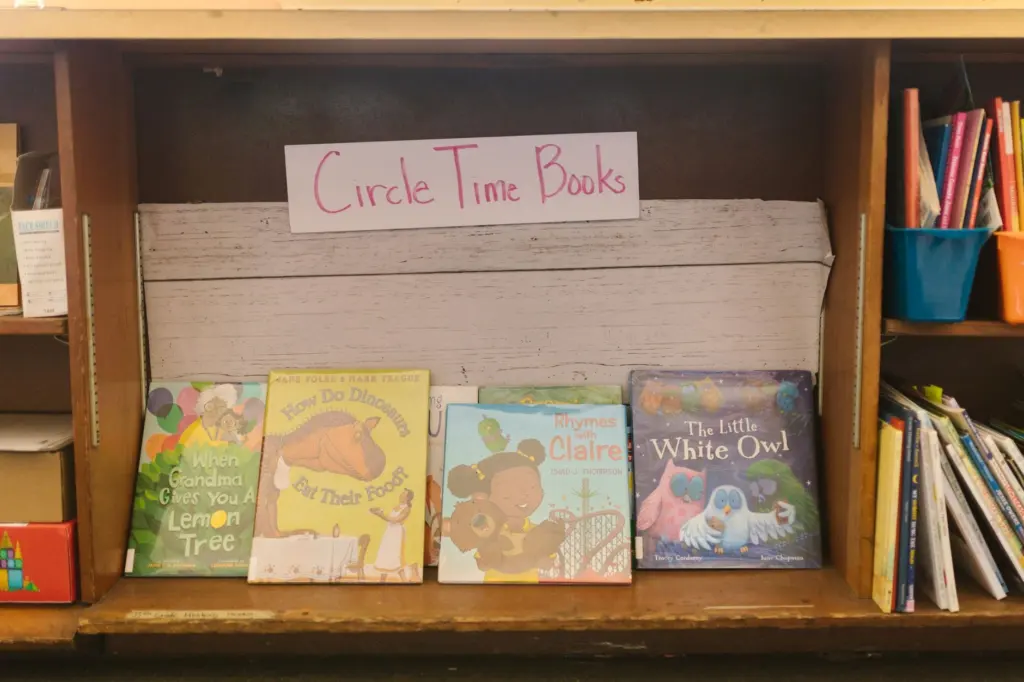
- Language: read picture books about the people who help in a neighborhood, then retell the story with toys or puppets.
- Number work: count and sort play vehicles or tools by the helper who uses them.
- Social-emotional: act out a helper’s job together, taking turns in each role. This gives the equal-weight social-emotional domain a concrete place in the plan.
Fourth week: Seasons and weather
- Language: learn a rhyme or fingerplay about weather, repeating it daily to practice memory and sound awareness.
- Number work: sort clothing by season and match each item to a weather picture.
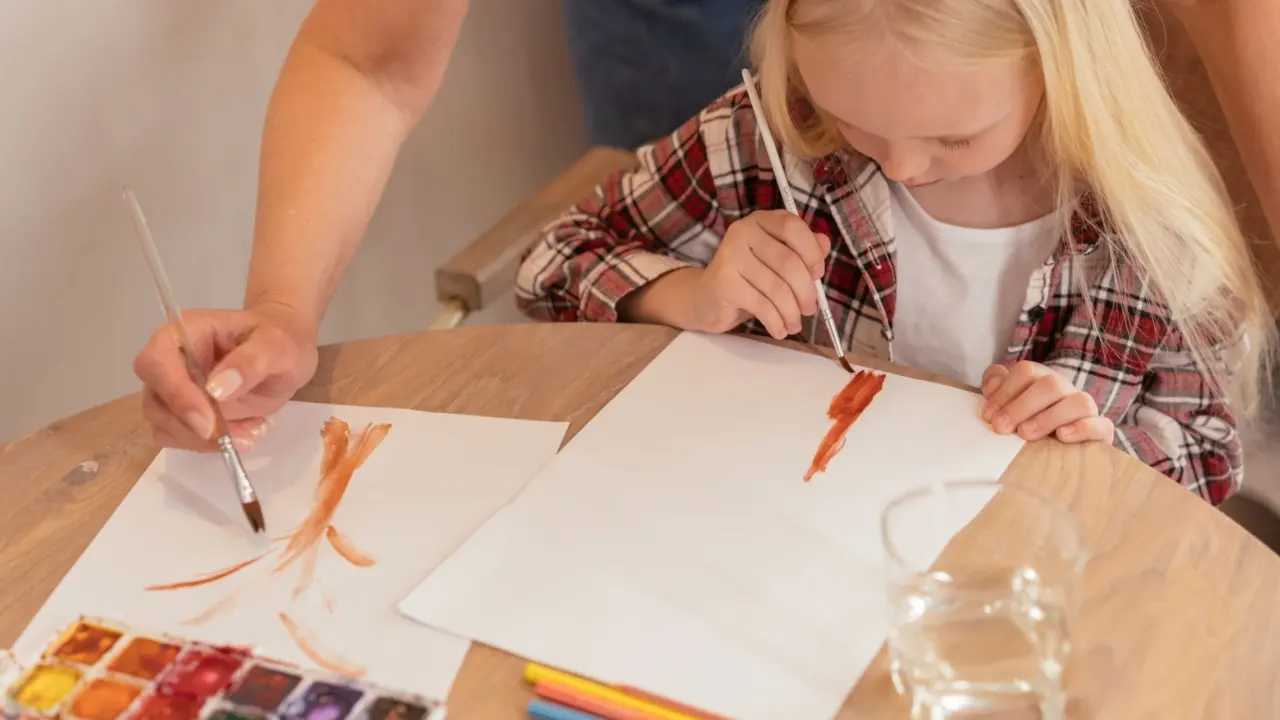
- Creative arts: paint or collage the weather outside that day, as a parent-guided craft.
When the four themes are done, repeat the cycle with new materials, or move to topics such as dinosaurs, transportation, and how authors and illustrators create books, which ELM uses for its summer weeks (Purdue ELM). ELM also supplies 18 optional repeated book reading plans on top of its activity plans, so rereading a favorite book across a week is a well-supported habit. A short observation note at the end of each week sets up the next section.
Tracking progress without testing
Tracking progress in preschool means observing and recording what the child does, not grading it. ELM supplies child observation guides and assessment tools to help adults tailor learning, and gives examples of child progress portfolio entries plus an observation checklist for ages 3-5 (Purdue ELM). A parent can borrow that approach in a light form.
- Write one observation per week. Note what the child tried, what went well and one next step. Use the week’s theme to choose which learning area to watch.
- Keep a small portfolio. A drawing, a photo of a sorted collection or a written line about what the child said can each act as an entry. They show change over time more clearly than any single result.
- Adjust, don’t repeat. If an activity is too hard or too easy, change its level. Meadowlark builds this into each lesson with Simplify and Expand options (Meadowlark), a pattern easy to copy at home.
Progress in this age range is uneven, so look for a trend across several weeks before changing the plan.
Choosing and combining published programs
A published program saves planning time but is not required. Each of the three below suits a different family.
- Purdue ELM suits parents who want a research-based structure. It follows a 50-week design with 20 activity plans in each week and a weekly family tips handout titled Readiness Starts Early (Purdue ELM). Its active learning strategies are recommended by NAEYC, and it was written for classrooms, so a home family will select from it.
- Easy Peasy suits families who want the lightest daily commitment, since each day centers on one letter and about 10-15 minutes of activities (This Homeschool House).
- Meadowlark suits families who prefer a scripted but gentle plan, with 90 lessons across 30 weeks and three sessions a week (Meadowlark).
Once these routines are steady, subject-specific resources can be layered in gradually. Families who want faith-based material can compare options in Choosing The Right Homeschool Bible Curriculum In 2026: A Practical Guide For Families – Peopleil, and those looking ahead to early composition can read Homeschool Writing Curriculum: A Practical 2026 Guide To Teaching Confident, Skilled Writers – Peopleil.
Frequently asked questions
| Question | Answer |
|---|---|
| Is there a free, research-based preschool curriculum? | Yes. All resources Purdue University developed for the ELM Curriculum are available free of charge, organized by age group: Birth-36 Months and 3-5 Years (Purdue ELM). |
| Should a child know letters before starting a structured course? | It affects the starting point. The Good and Beautiful suggests its Preschool Course Set of 90 lessons if the child has not yet mastered letter names and sounds, and its Kindergarten Prep course of 30 lessons otherwise (Good and Beautiful). |
| When do handwriting-readiness materials make sense? | Workbooks that build fine motor control are offered for ages 2½-5, so they can start before formal letter formation and run alongside cutting, drawing and tray play (Good and Beautiful). |
| Is there anything for parents themselves each week? | ELM includes one Readiness Starts Early parenting tips handout per week, which can serve as a short family reading or conversation prompt (Purdue ELM). |