
| Habit area | What the evidence says | Planning use |
|---|---|---|
| Self-control | A peer-reviewed review calls self-control a significant determinant of success throughout life. In a large cohort study, poor childhood self-control predicted worse adult health, more financial troubles and more crimes. | Build small daily moments that practise waiting for a larger reward, and keep each habit easy enough to finish. |
| Sleep | Insufficient sleep duration affects various brain functions. | Protect sleep before adding any morning ritual that cuts into it. |
| Routine timing | People differ widely in preferred time of day for demanding mental tasks, in sleep timing and in sleep duration. | Fit your hardest work and wake time to your own pattern, not someone else’s schedule. |
| Goal setting | A time-management author recommends goals that are specific, relevant and time-bound (SMART), written down and reviewed daily. | Write each goal in that form and attach the review to something you already do every day. |
The first three rows come from a peer-reviewed review, and the goal advice comes from Brian Tracy’s daily-habits article.
The habits of successful people start with self-control, enough sleep and a written, reviewed goal plan. None of them guarantees results, so adapt each one to your own rhythm and add them gradually.
If you want the learning side of this in more depth, the guide on how to build a study routine applies the same ideas to study and everyday life.
Self-control as the base habit
A peer-reviewed review of self-control research describes self-control as a significant determinant of success throughout life. It also points to another large cohort study in which poor childhood self-control significantly predicted negative adult outcomes: worse health, more financial troubles and more crimes. The practical consequence for a daily routine is that every other habit depends on doing the planned thing when something easier is on offer. A routine should therefore be designed to be easy to keep, not impressive to describe.
Several choices follow from that:
- Keep each habit small. A short routine you complete beats an ambitious one you abandon, because the point is repeated practice at following through.
- Add habits one at a time. Starting everything at once demands the most self-control on the days you have the least.
- Remove the easy alternative. If your phone is the competing reward, put it out of reach during the habit instead of relying on willpower.
Cohort findings describe patterns across groups of people, so treat them as a reason to practise follow-through, not as a prediction for any one person. Self-control also depends on rest, which brings the routine to sleep and the start of the day.
Morning routine and sleep
A morning routine only helps if it does not cost you sleep. The same review reports that insufficient sleep duration affects various brain functions, so a routine built on cutting sleep works against the clear thinking it is supposed to support. The review also notes large individual differences in preferred time of day for demanding mental tasks, in sleep timing and in sleep duration. Copy the structure of someone else’s morning, not their clock time.
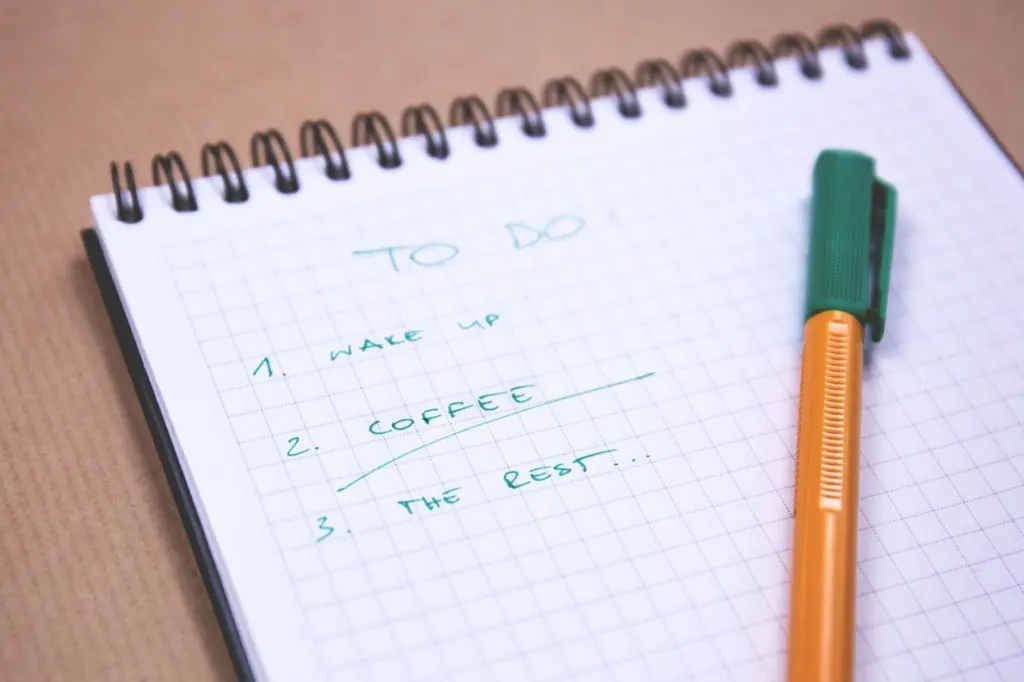
Building a routine around your own rhythm
To build a routine that lasts, start from your own pattern rather than an ideal one:
- Find your best thinking window. Notice when demanding work feels easiest and protect that window for your most important task.
- Anchor the routine to an existing act. Attach it to waking, a first drink or sitting down at your desk, so you do not have to remember it separately.
- Start with a short sequence. A planning note, a bit of movement and a glance at your priorities is enough for the first weeks.
- Change only one thing at a time. If the routine stops working, adjust the item that caused friction instead of rebuilding the whole morning.
Early risers can use the morning for the hardest work. If your focus peaks later, a morning routine can simply be the planning step that sets up the rest of the day. Once the day has a start, the next question is what it is aiming at.
Goal setting and time management
Goal setting works when a goal can be checked. Brian Tracy recommends SMART goals that are specific, relevant and time-bound, written down and reviewed daily. This is one author’s recommendation, not a research finding, but the logic is easy to test: a vague intention cannot be reviewed, whereas a specific, dated goal shows you plainly whether today’s work moved it forward.

Time management is how that goal meets the actual day. One lifestyle writer on habits of naturally successful people makes a useful distinction: a healthy sense of urgency is not the same as desperation or anxiety. In planning terms, that means setting deadlines that keep you moving calmly and focused, not stacking so many that every hour feels like an emergency.
- Write the goal before the to-do list. Choose tasks by asking whether they move a written goal, and defer the rest.
- Use deadlines that create focus, not panic. If a deadline makes you anxious instead of purposeful, break the goal into smaller dated steps.
- Put the review where it will happen. Pair it with the morning planning step so it does not depend on remembering.
Goals and schedules set the direction. How you respond when things go wrong decides whether you keep going.
Growth mindset and continuous learning
A growth mindset shows up as a daily response to problems, not a belief you hold in the abstract. Jake Smolarek’s piece on habits of highly successful people advises treating problems as chances to learn and grow, even learning to be thankful for the opportunity. It is a personal recommendation, not a measured result, but it gives learning a place in an ordinary day: when something goes wrong, the useful question is what it can teach you.
That habit only pays off if the lesson survives the day. Write down what a setback or a new idea taught you, and keep those notes where you can find them again. Comparing note systems is the quickest way to choose the best way to organize notes for your own review, so look at best way to organize notes before committing to one. Regular, modest learning sessions then become easier to keep, and the guide on how to make learning a habit shows how to fit them into a normal day.
- Reframe before reacting. After a setback, ask what it taught you before deciding how you feel about it.
- Record one lesson. A single written line is enough to turn a problem into something you can reuse.
- Revisit your notes in your review. Reading them during your goal review links learning to the goals it serves.
Frequently asked questions
What did the marshmallow test ask children to do?
Four-year-olds chose between one marshmallow immediately and two marshmallows if they waited up to 15 minutes, as described in the review. Researchers use that choice to study self-control, meaning the ability to wait for a larger reward.
Do I need to wake before sunrise to have a good morning routine?
No. The review reports that pre-industrial people woke just before sunrise and went to sleep 3.3 hours after sunset, but that describes a historical pattern, not a rule. Choose a wake time you can keep while getting enough sleep.
How often should I review my goals?
Brian Tracy recommends reviewing written goals daily. Because this is one author’s advice, begin at whatever frequency you can sustain and increase it once the review feels routine.
Do these habits guarantee success?
No. The review states that the arrows in its model indicate necessary requirements, not sufficient ones. Self-control and sleep support good outcomes without ensuring them.